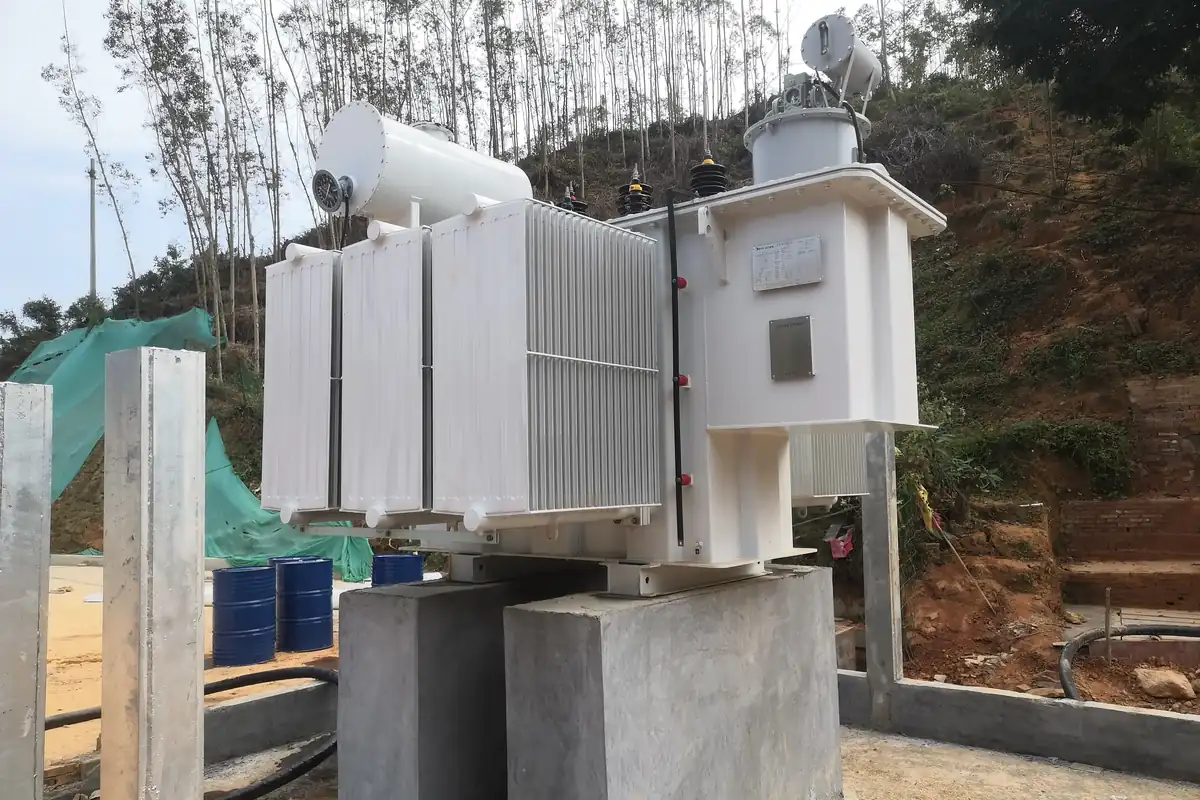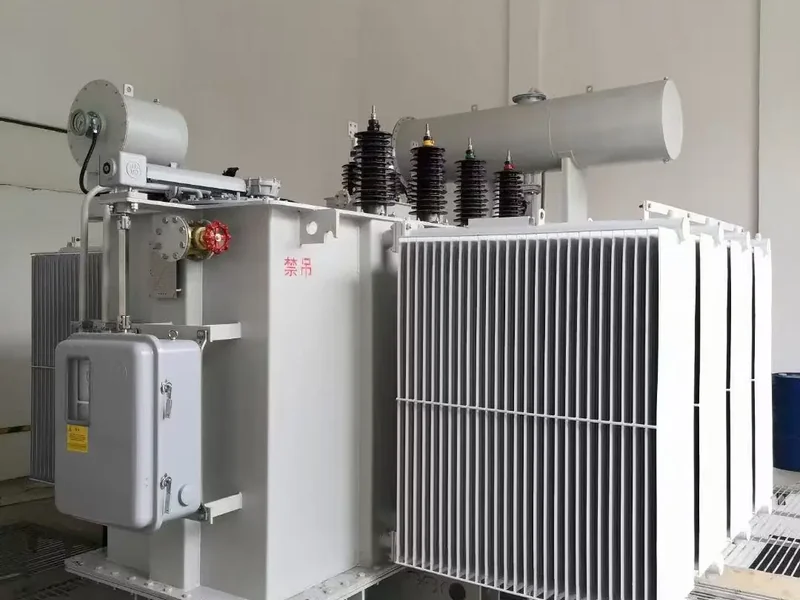
Power Transformer Testing: Routine, Type, and Special Tests Buyers Should Verify
A power transformer can pass a clean visual inspection and still fail in service — the test report is what tells them apart. But which tests ran, on which unit, to which standard? Answer those three before you sign, and you avoid most field surprises.
What tests a power transformer actually goes through
Under IEEE C57.12.90, the test code referenced by IEEE C57.12.00, power transformer tests fall into three groups:
- Routine tests run on every single unit before it leaves the floor: turns-ratio, winding resistance, no-load and load losses, impedance, insulation resistance, applied-voltage and induced-voltage withstand, and partial discharge.
- Type tests verify a design rather than an individual unit: temperature-rise (heat run), lightning-impulse withstand, and audible-sound level. They are run once on a representative unit of a given design.
- Special tests are whatever the buyer or the project specification adds on top — short-circuit withstand, extended partial-discharge measurement, harmonic or zero-sequence impedance, and similar.
The routine test report is the document that travels with your unit. Its measured values — losses, impedance, ratio — should match the nameplate. A load-loss figure well above the guaranteed value points to a winding problem; an impedance that drifts from the design value will change how the unit shares load with others on the same bus. Partial-discharge results matter most of all, because rising PD is the earliest warning that the insulation system has a weak point that heat and time will eventually find.
| Test group | Run on | Purpose | Typical tests |
|---|---|---|---|
| Routine | Every unit | Confirm this unit is built right | Ratio, winding resistance, losses, impedance, insulation, applied/induced withstand, partial discharge |
| Type | One representative unit per design | Verify the design | Temperature rise, lightning impulse, sound level |
| Special | By specification | Cover project-specific risks | Short-circuit withstand, extended PD, harmonic or zero-sequence impedance |
Why routine, type, and special are not interchangeable
This is where specifications get misread. A supplier can truthfully say a design has been type-tested while the specific transformer you receive has only had routine tests — and that is normal. Type tests prove the design will handle an impulse or a full heat run; you do not repeat them on every unit because some are destructive or impractical to run in series production.
The practical consequence: “type tested” on a datasheet refers to a design, not to your serial number. If your project needs evidence tied to the exact unit shipping to site, that comes from the routine report and, where required, from witnessed testing.
How to lock down testing before you order
Three things save the most trouble later:
- Ask for the routine test report format up front and confirm it lists measured losses, impedance, and ratio against the nameplate — not just a pass/fail stamp.
- Confirm which type tests exist for the design you are buying, and whether the impulse and heat-run levels match your system voltage and ambient conditions.
- Decide early if you need witnessed testing — a factory acceptance test (FAT) you attend, or a third-party witness. As an example of the latter, a 60 MVA 230 kV power transformer completed routine, type and special tests in accordance with IEEE C57.12.00 / C57.12.90, witnessed by KEMA Labs.
Witnessing and special tests add lead time, so raise them before the contract, not after. Standard transformer lead time runs 5–8 weeks from contract, with volume schedules confirmed per project.
Frequently Asked Questions
Does every power transformer get type-tested?
No. Type tests verify a design and are run on a representative unit. Every unit still receives the full set of routine tests before shipment.
Can I witness the tests myself?
Yes. You can attend a factory acceptance test, or arrange an independent third party to witness — for instance, witnessed testing by an accredited laboratory such as KEMA Labs. Confirm the scope and schedule in the contract.
Which standard governs power transformer testing for U.S. projects?
IEEE C57.12.00 sets the general requirements, and IEEE C57.12.90 is the test code that defines how each test is performed and evaluated.
To match a unit to your application, see our electrical power transformer page. If you are still choosing a supplier, compare power transformer manufacturers in the USA.
Final Thoughts
Testing is where an order stops being a spec sheet and becomes evidence. We build power transformers from 100 kVA to 63 MVA to IEEE C57.12.00 and C57.12.90. Send your rating and test scope and we will come back with a routine and type test plan — contact our engineering team.