Padmount Transformer Lead Times in 2026: Which Number Actually Applies to Your Order
Search for transformer lead times and you will be told anywhere between eight weeks and six years. Both numbers are real. They describe different products. Before you build a schedule around either one, you need to know which of them applies to the unit you are actually buying.
The short version
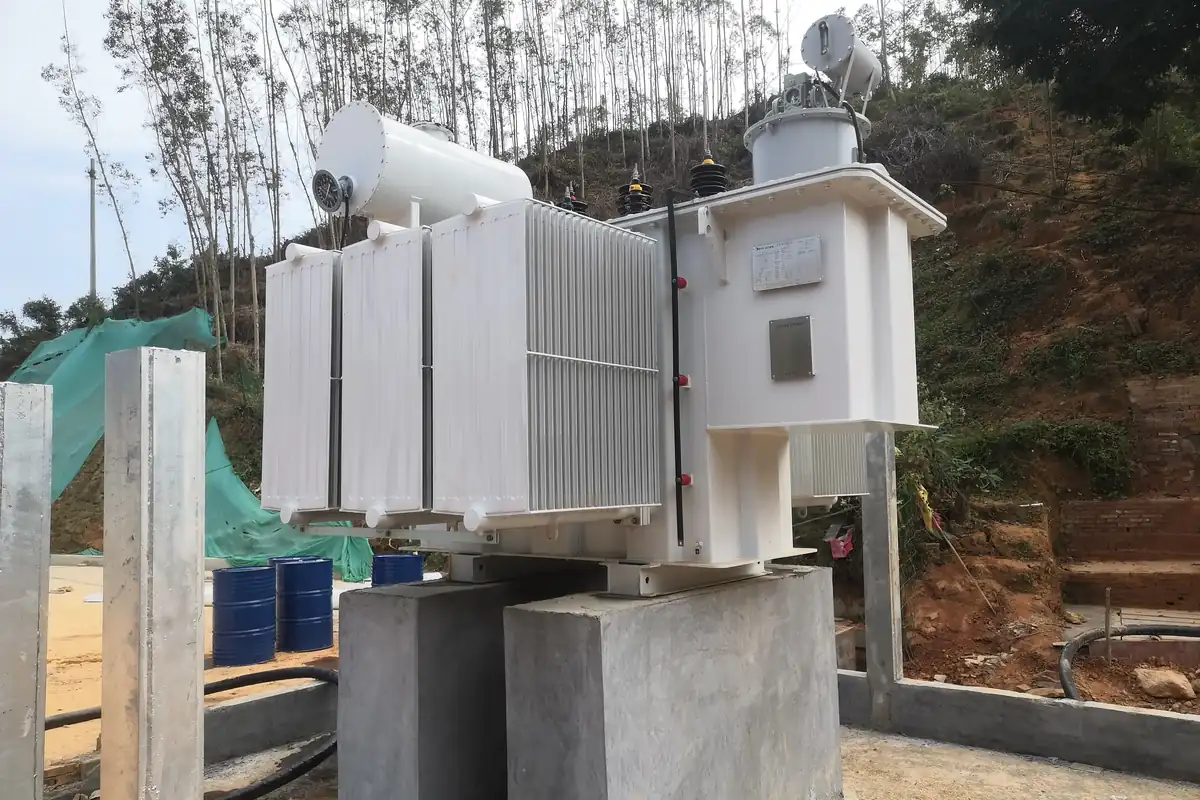
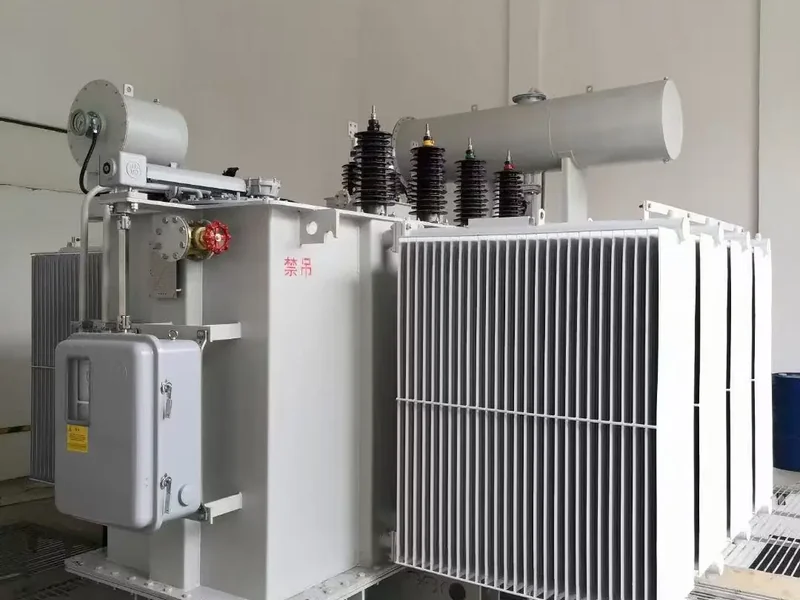
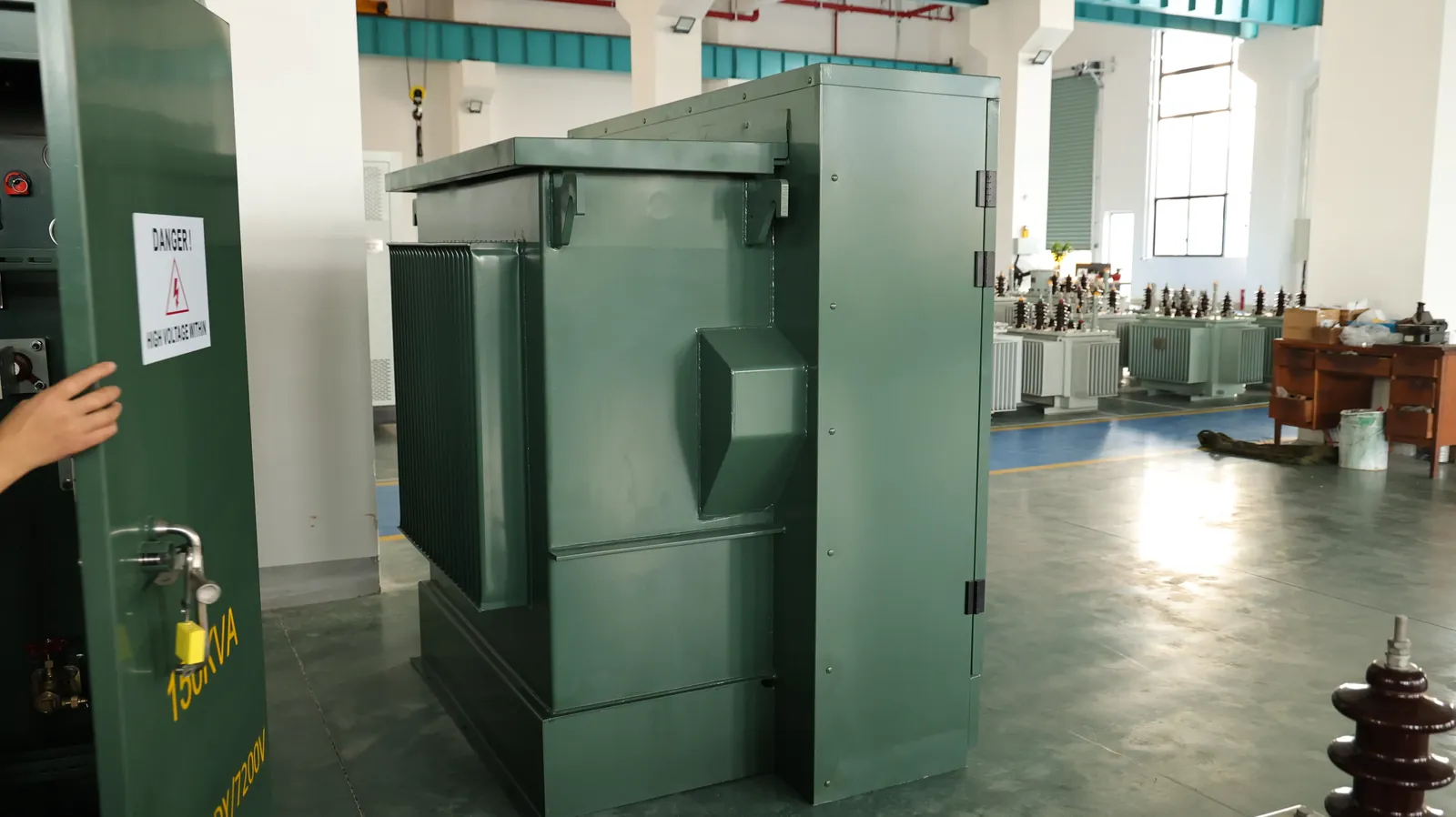
A three-phase padmount transformer is a distribution transformer, not a power transformer. The widely quoted 80–120 week and three-to-six year figures are for large power transformers — transmission-class machines above roughly 10 MVA. Padmount units sit in a different queue. In 2026 that queue typically runs 40 to 60 weeks in North America, with a long tail that NEMA puts at up to three years for units built to a specific utility standard.
The two numbers that keep getting mixed up
Most procurement articles on this subject quote a single headline figure. That is where the confusion starts, because the transformer market is not one market. The dividing line that matters is roughly 10 MVA and transmission voltage.
| Distribution transformer includes padmount | Large power transformer | |
|---|---|---|
| Typical size | Up to about 10 MVA | Above about 10 MVA |
| Typical primary voltage | 34.5 kV and below | 69 kV and above |
| Where it sits | Distribution network, customer site | Transmission network, substation, generation |
| 2026 lead time | 40–60 weeks typical | 128 weeks average |
| Reported tail | Up to three years (NEMA) | Up to six years for specialised units |
The 128-week figure comes from Wood Mackenzie’s 2025 survey of power transformer delivery. Generator step-up transformers in the same survey averaged 144 weeks. Those are the numbers that get repeated in trade headlines, and they are accurate — for transmission-class machines built to order by one of the small number of plants worldwide capable of them.
They are not the number for a 1500 kVA padmount on a commercial service. If a supplier quotes you a padmount schedule and justifies it with a power transformer statistic, that is worth a question.
What padmount actually runs in 2026
Published 2026 figures for North American padmount transformers do not agree with each other, and the spread is instructive:
- 26–40 weeks for standard catalogue distribution units
- 40–60 weeks for padmount distribution transformers up to 5 MVA — the most commonly cited band
- 12–18 months quoted in mid-2026 for specifications that drew eight-week quotes in 2023
- 80–120 weeks in figures published by suppliers who sell a faster alternative
- Up to three years according to NEMA, against a pre-2020 baseline of four to six weeks
Treat the widest numbers with the same caution you would apply to any figure published by a party with an interest in it. That includes figures published by us. The band that shows up most consistently across independent sources is 40 to 60 weeks.
The more useful observation is that the spread itself is the finding. A five-fold difference between the low and high quotes for nominally the same product means the lead time is not a property of the product. It is a property of your specification and of which queue you land in.
Why the queue got this long
Demand moved faster than capacity
The National Renewable Energy Laboratory expects US electricity demand to rise almost 16% by 2030, and projects that distribution transformer requirements could increase by up to 260% against 2021 levels by 2050. There are 60 to 80 million distribution transformers installed across the United States, and NREL estimates about 55% of residential units are near the end of their service life. Replacement demand alone is substantial before a single new data centre is connected.
Materials repriced
Grain-oriented electrical steel — the core material in every unit — has roughly doubled in price since 2020. Copper is up more than 50%. Distribution transformer prices have climbed 78% to 95% since 2019. Material availability, not assembly labour, is the constraint most manufacturers name first.
There is no such thing as a standard transformer
This is the driver that gets least attention and explains the most. The National Infrastructure Advisory Council counts more than 80,000 distinct transformer types across the US power system. Each utility maintains its own accepted-equipment standard: bushing arrangement, fusing, switch type, paint, pad footprint, loss evaluation, nameplate format. A manufacturer cannot build ahead for 80,000 variants, so almost nothing is genuinely in stock, and almost every order enters the queue as a fresh engineering job.
Capacity is being added — around $600 million in new US transformer capacity was announced by manufacturers in 2024 — but new plant takes years to qualify, and the variant problem does not go away when a plant opens.
What Drives Pad-Mounted Transformer Lead Times
Five things decide where your padmount lands inside that range. Each one either stretches your date or shrinks it, and for most of them you have a move.
Core and coil manufacturing
Your silicon steel laminations and copper or aluminum windings are built to order, not pulled off a shelf. The winding and vacuum-drying cycle alone takes several weeks of shop time. You cannot compress it — but you can release your one-line early so winding starts on day one.
Tank fabrication and coating
Dead-front tanks need close dimensional tolerances for pad or below-grade installation, and the primer, polyurethane topcoat and cure cycle add days that cannot be rushed without hurting coating adhesion. If your site is coastal or corrosive, say so early — a changed coating spec after release costs you weeks.
Factory acceptance test
Every unit ships with a routine test report, which is already in the schedule. A witnessed test is not: that slot competes for the manufacturer’s test bench, and a busy shop can push you back weeks. Decide whether you need to witness before you place the order, not after.
Overseas freight
An imported unit adds ocean transit — typically twenty-five to thirty-five days to a US West Coast port, longer inland — but it enters a different order book than the domestic queue. When the domestic queue is the bottleneck, that trade is often net faster, not slower.
Domestic logistics
Flatbed transport, utility staging yards and site delivery coordination all run after the unit leaves the factory floor, and they are rarely inside the quoted number. Ask whether your date is ex-works or delivered to site — the two are not the same, and the gap is yours to schedule.
Six Variables That Move Your Number
Two buyers can order the same 1000 kVA padmount in the same month and receive quotes six months apart. These are the variables that account for the gap.
1. Whose standard it is built to
A unit built to a utility’s accepted-equipment standard requires drawing approval by that utility before production starts. Approval cycles routinely add six to twelve weeks that no manufacturer controls. A unit built to plain IEEE C57.12.00 and C57.12.28 skips that loop entirely.
2. Insulating fluid
Natural ester is frequently specified for fire performance near or inside a building envelope. It is also a smaller supply chain than mineral oil. If your schedule is tight and the fire case does not require ester, this is worth revisiting early rather than late.
3. How firm the one-line is
Impedance, tap range and secondary voltage changes after drawing release restart part of the engineering cycle. A transformer ordered against a one-line that is still moving will slip regardless of who builds it.
4. Loss evaluation
A loss-evaluated purchase changes the core and coil design and therefore the material bill. It is a legitimate requirement for a utility, and an expensive schedule choice for a commercial project that will never audit the figure.
5. Where it is built
Domestic and imported units draw on different order books. An imported unit adds ocean transit — typically four to six weeks to a US west coast port, longer to inland destinations — but enters a queue that is not the domestic one.
6. Whether anything is actually in stock
Stock exists mainly for the most generic ratings and configurations. If a distributor quotes weeks rather than months, confirm the unit already physically exists and confirm its nameplate matches your requirement before the schedule depends on it.
How Long Overseas Sourcing Takes
When your specification falls within the kVA and voltage range covered by a manufacturer’s UL file, sourcing from an overseas factory changes the structure of your timeline significantly. Manufacturing lead time compresses to 5–8 weeks from contract execution — the result of volume capacity not subject to the same domestic backlog. Volume schedules are confirmed per project, not assumed.
Ocean freight adds roughly 3–5 weeks to a U.S. West Coast port of entry, or 4–6 weeks to the East Coast. Add 1–2 weeks for customs and inland delivery and you are looking at a realistic 9–16 week door-to-site window for many projects — roughly one-quarter of the domestic wait.
| Phase | Domestic supply | Overseas supply (UL file) |
|---|---|---|
| Manufacturing lead time | 30–50 weeks | 5–8 weeks from contract |
| Ocean freight to U.S. port | — | 3–6 weeks |
| Customs and inland delivery | 1–2 weeks | 1–2 weeks |
| Typical door-to-site total | 40–60 weeks | 9–16 weeks |
The trade-off is that your quality control moves to origin. You need to review the UL listing file, request the factory test report, and specify inspection rights in your purchase order before the unit ships.
How to compress a padmount schedule
- Separate the transformer from the rest of the package. Switchgear, cable and the pad have different lead times. Ordering them as one package paces everything to the slowest item.
- Release the transformer against a frozen one-line, not a complete design. The transformer needs rating, voltages, impedance, fluid and feed arrangement. It does not need the rest of the building.
- Ask which requirements are driving the date. A good supplier can tell you which line in your specification costs the most weeks. Sometimes it is one that nobody in the room actually needs.
- Get the drawing approval loop started before the order, not after. If a utility must approve, that clock can often run in parallel with procurement rather than after it.
- Treat the quoted date as a claim to be tested. See the next section.
How to Choose a Padmount Transformer Supplier That Can Hold a Delivery Date
- Does the clock start at purchase order or at drawing approval? This single distinction routinely accounts for two months.
- Is that date ex-works, FOB, or delivered to site? Ocean transit and inland haulage are not rounding errors.
- What is the routine test schedule and is witness testing included? Witness testing needs a date in the plant’s calendar, not just in yours.
- Which of my requirements is adding the most weeks? If the answer is vague, the date is probably a catalogue figure rather than a scheduled build.
- What happens to the date if I change the secondary voltage after approval? The answer tells you how much of the engineering is genuinely done.
Before you lock in a delivery date with any supplier, four questions will tell you whether the lead time you have been quoted is real.
Does the listing cover your specification?
A UL file number is not enough on its own. Check the CCN, the kVA range, and the HV system voltage range on the actual certificate. The unit your project requires must fall within those listed parameters, not just near them. You can verify at UL Product iQ using the file number and CCN. If you are evaluating a three-phase dead-front pad-mounted transformer, confirm the kVA and HV class against the certificate before your purchase order is written.
What production slot are you being offered?
A supplier who is managing their schedule honestly gives you a specific production window, not a generic lead-time range. If your delivery date has a hard project milestone attached to it, get a written production slot — not a verbal estimate — before you release funds.
Will you receive the factory test report before shipment?
For a pad-mounted transformer entering a utility distribution system, the routine test report is the primary evidence of conformance to IEEE C57.12.00 and C57.12.28. Specify it in your purchase order and ask to see it before you authorize release for loading.
What are the shipping terms?
EXW, FOB port, and DDP each shift cost risk and logistics responsibility differently. Know your terms before comparing total landed cost across suppliers, because a low ex-works price can arrive looking quite different by the time it reaches your job site.
Where we sit
We build padmount transformers to drawing, not from stock. A standard build runs 5–8 weeks from contract, confirmed per project against the approved drawing. That band is for a scheduled build on an approved drawing; multi-unit schedules are confirmed per project rather than assumed from the single-unit figure.
Apply to that figure the same caution this article recommends for any date published by a party with an interest in it: ask which clock it starts on, and ask for it in the contract. Where a supplier quotes a schedule that looks an order of magnitude faster than the market, check whether they have compared a distribution transformer build against a power transformer statistic.
The units are listed under UL File E529552. We publish the file number rather than the claim, because the number is what a compliance reviewer can check on UL Product iQ. Coverage is specific: the padmount series covers 45–5000 kVA at 26–36 kV, and the substation series cover 30–5000 kVA at 26–36 kV and 112.5–7500 kVA at 17–26 kV. A unit outside those ranges is outside the listing, and we will say so rather than let the file number imply otherwise.
Full ratings, configurations and the certification detail are on the padmount transformer page.
Frequently Asked Questions
Is a padmount transformer a distribution transformer or a power transformer?
A distribution transformer. Padmount units sit on the distribution side, typically at 34.5 kV and below and under about 10 MVA. The lead time statistics you see for power transformers — 128 weeks average, up to six years for specialised units — describe transmission-class machines and do not apply to a padmount purchase.
Why do padmount lead time quotes vary so much?
Because almost nothing is genuinely standard. There are more than 80,000 distinct transformer types across the US power system, and each utility maintains its own accepted-equipment standard. A unit built to a utility standard requires drawing approval before production; a unit built to plain IEEE C57.12.00 does not. That difference alone can be several months.
Does the lead time clock start at purchase order or at drawing approval?
It depends on the supplier, and it is the first thing to establish in writing. A build quoted at 16 weeks from drawing approval and one quoted at 16 weeks from purchase order can deliver two months apart. Ask which one the date refers to before comparing two quotations.
Will an imported padmount transformer actually arrive sooner?
It enters a different order book, which is the substantive point, but ocean transit is real — typically four to six weeks to a US west coast port and longer inland. Compare delivered-to-site dates rather than ex-works dates, and confirm the unit is listed to the standard your reviewer will check.
Does specifying natural ester affect the schedule?
It can. Natural ester is often specified for fire performance near or inside a building envelope, and it draws on a smaller supply chain than mineral oil. Where the fire case genuinely requires it, specify it. Where it has been carried over from a previous project without review, it is worth revisiting before the order rather than after.
Have lead times started to improve?
Distribution transformer availability has eased somewhat from its worst point, while large power transformers remain above two years. Around $600 million in new US transformer capacity was announced in 2024, but new plant takes years to qualify, and demand growth means backlogs are expected to persist. Plan against the current quoted date, not against an expected recovery.
What information does a supplier need to quote a real date?
Rating in kVA, primary and secondary voltage, phase and frequency, insulating fluid, feed arrangement (loop or radial), and any utility or site standard that applies. A one-line diagram or a specification sheet covers most of it. Without those, any date quoted is a catalogue figure rather than a scheduled build.
What’s the difference between manufacturing lead time and delivery lead time?
Manufacturing lead time ends when the unit leaves the factory floor. Delivery lead time ends when it reaches your site. Ocean transit, customs clearance, flatbed transport and site coordination all sit between the two. Ask which one your quoted date refers to, and get the answer in writing before you build a schedule on it.
Can I get a smaller kVA unit faster?
Units in the 75–500 kVA range more often have stock or short-queue availability. For 1,000 kVA and above, standard lead times apply regardless of kVA; the coil winding and tank fabrication time does not shrink proportionally with smaller ratings. If your project can accommodate a standard rating, ask your supplier whether your rating is available from stock or a short queue before you budget on a full build timeline.
What happens to lead time if I need to change the specs after ordering?
A change to impedance, tap range, secondary voltage or the bushing arrangement after drawing release restarts part of the engineering cycle, and typically adds four to eight weeks. Changes to the coating or accessories are usually cheaper in schedule terms. The practical move is to hold the order until your one-line is firm rather than ordering early and revising.
Can I get a pad-mounted transformer faster than 5–8 weeks?
In some cases — if a supplier holds finished-goods inventory of common ratings such as 167–1000 kVA. Stock units ship faster but come with fixed specifications. If your project requires a custom kVA, a specific primary voltage, or particular tamper-resistant fitting configurations, a made-to-order unit is almost certainly the right path. Confirm with your supplier that any stocked unit matches your utility’s pad-mounted transformer standard before you commit.
Does country of origin affect whether my AHJ will accept the unit?
Country of manufacture does not determine acceptance — the nameplate data and NRTL listing do. What your AHJ and utility are checking is whether the transformer carries a valid listing file covering your kVA rating and HV system voltage class. If the unit falls within the listed parameters of a recognized UL file, origin is not the deciding factor. Ask your supplier for the file number and CCN so you can verify at UL Product iQ before you sign the purchase order. For more detail on what a file number and CCN actually cover, see our three-phase dead-front pad-mounted transformer range.
Final thoughts
Before you plan around any lead-time figure, check which product it describes — the distribution and power transformer queues are nothing alike. After that, your own number depends on decisions still open: whose standard, which fluid, how firm the one-line, and when the clock starts. If you need yours pinned down, contact us.
Send a spec. Get a confirmed lead time.
Rating, voltages, fluid and feed arrangement are enough to start. A one-line diagram or specification sheet is better. We will come back with a date confirmed against your drawing, and tell you which line in your specification is costing the most weeks.
Request a quotationSources
- Utility Dive, “Transformer supply bottleneck threatens power system stability as load grows”, February 2025 — citing NEMA, the National Renewable Energy Laboratory, the National Infrastructure Advisory Council, Wood Mackenzie and Hitachi Energy
- Wood Mackenzie transformer delivery survey, 2025 — 128-week average for power transformers, 144 weeks for generator step-up units
- National Renewable Energy Laboratory — US electricity demand growth to 2030; distribution transformer requirement projection to 2050; installed base and end-of-life estimates
- National Infrastructure Advisory Council — count of distinct transformer types across the US power system
- NEMA — distribution transformer lead time range and pre-2020 baseline
Third-party figures in this article are published industry and government estimates and are cited as such. Lead times move; check the date on any figure before planning against it. Our own build times are confirmed per project and per contract against the approved drawing.